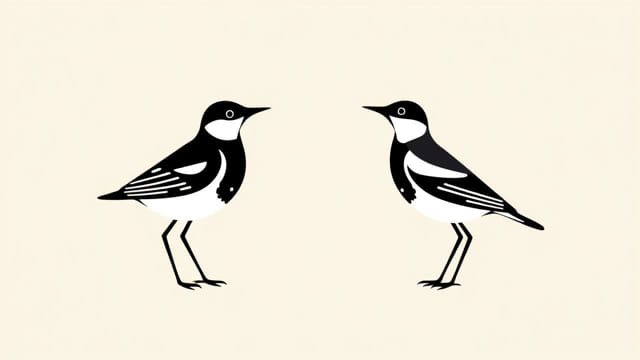
The bobolink is a fascinating North American songbird, easily recognized for its unique appearance, melodic song, and long migratory journey. Belonging to the blackbird family, bobolinks exhibit strong sexual dimorphism, meaning that males and females have distinctly different appearances, behaviors, and roles during the breeding season. Understanding the differences between the male and female bobolink not only enhances birdwatching experiences but also sheds light on their breeding ecology and survival strategies. Observing these grassland birds offers insight into their intricate world, from their courtship displays to nesting and migration.
Physical Differences Between Male and Female Bobolinks
Male Bobolink Appearance
The male bobolink is most striking during the breeding season. His appearance is a stark contrast to many other songbirds, making him easily identifiable in grassland habitats.
- Breeding plumage features a black front (head, chest, and underparts)
- Bright buff or cream-colored nape that gives a cap-like appearance
- White patches on the back and wings
- Contrasting dark and light tones from behind resemble a tuxedo worn backward
This unique pattern serves as a visual signal to females and rivals during the breeding season. The male’s plumage becomes duller and more similar to the female’s outside of the breeding season, offering camouflage during migration.
Female Bobolink Appearance
The female bobolink is much more subdued in color, which is essential for her role during nesting. Her plumage helps her blend into the grassy surroundings of her breeding habitat.
- Overall buffy or tan coloration
- Streaked back and faint facial stripes
- Yellowish-brown crown with less contrast than the male
- Short, pointed bill suited for seed and insect consumption
The female’s earthy tones provide excellent camouflage, especially when she is sitting on a nest or foraging close to the ground.
Behavioral Differences
Male Behavior and Courtship
During the breeding season, male bobolinks are highly vocal and territorial. They arrive at breeding grounds before females to establish territories and begin their elaborate displays to attract mates.
- Sing loud, bubbly songs while flying over grasslands
- Perform fluttering, butterfly-like display flights
- Defend nesting territories aggressively from other males
The song of the male bobolink is one of the most distinctive sounds in springtime grasslands. It serves to impress females and warn other males to stay away from their territory.
Female Behavior and Nesting
Females are responsible for selecting nest sites and building the nests. They prefer dense grassland habitats where they can construct well-hidden nests close to the ground.
- Build cup-shaped nests using grasses and plant fibers
- Lay 46 eggs typically in late spring or early summer
- Incubate eggs alone for about 1013 days
- Forage for insects and seeds to feed chicks after hatching
Because females handle all incubation and much of chick-rearing, their discreet behavior and muted coloring serve as critical protection from predators.
Migratory Patterns
Shared Journey
Both male and female bobolinks are long-distance migrants. They breed in North America and migrate to South America for the winter, a round trip of nearly 12,000 miles.
- Breed in northern U.S. and southern Canada
- Migrate through the U.S., Caribbean, and parts of Central America
- Winter primarily in countries like Argentina, Paraguay, and Bolivia
Despite the long migration, males and females often follow similar paths and timing, although males tend to return earlier to breeding grounds to secure territories.
Breeding and Mating Strategies
Male Mating Strategy
Male bobolinks may be polygynous, meaning they can mate with more than one female during a single breeding season. This behavior is linked to their display strategies and the size of their territories.
- Males with better territories may attract multiple females
- Maintain multiple nests within their territory
- Use song and visual displays to maintain control over females and space
This mating system increases a male’s reproductive success, although it requires significant energy and effort to defend multiple nesting areas.
Female Mating Strategy
Females often choose mates based on the quality of the territory and the male’s display. They may occasionally mate with males outside their territory, resulting in mixed paternity in a single brood.
- Select nesting sites based on safety and food availability
- Prioritize genetic diversity by occasionally engaging in extra-pair copulations
- Focus primarily on chick rearing and nest protection
The reproductive roles of male and female bobolinks are a balance of competition, selection, and survival, shaped by millions of years of evolutionary pressure.
Diet and Feeding Habits
Male and Female Diet Similarities
Both sexes feed primarily on seeds and insects, with diets shifting depending on the season. During breeding, protein-rich insects are more common, while seeds dominate their winter diet.
- Eat grass seeds, weed seeds, and grain crops
- Consume caterpillars, beetles, and other small insects during nesting season
- Forage on the ground or among grasses
This flexible diet supports their energetic needs for migration, courtship, and raising young.
Conservation and Habitat Concerns
Decline in Population
Both male and female bobolinks are affected by habitat loss and agricultural practices. Their breeding habitats native prairies and hayfields are disappearing, and the use of pesticides threatens their food sources.
- Loss of tallgrass prairie due to urban and agricultural development
- Early hay harvests destroy active nests
- Exposure to pesticides on wintering grounds in South America
Conservation programs that promote delayed mowing, pesticide reduction, and grassland preservation are essential for supporting healthy bobolink populations.
The male and female bobolink present a vivid example of how nature crafts distinct roles within a species. From the male’s dramatic displays and bold markings to the female’s quiet resilience and strategic nesting, each contributes uniquely to the survival of their species. Observing the differences between male and female bobolinks deepens our understanding of avian biology, reproductive strategies, and conservation challenges. Whether heard singing in a grassland or seen darting low over a field, the bobolink remains a treasured symbol of North America’s natural heritage and the delicate balance of life in open landscapes.