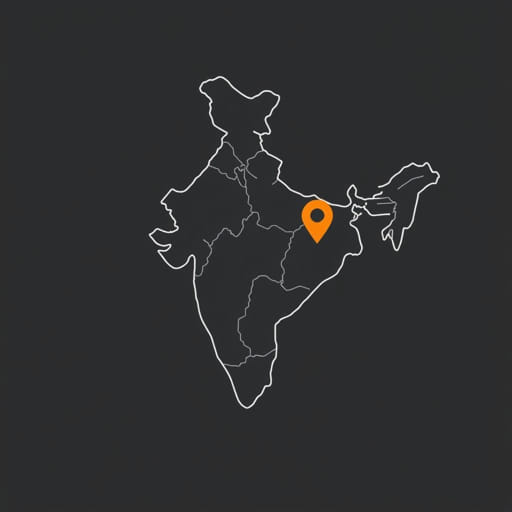
Locate Western Ghats on the India Map A Complete Geographic OverviewThe Western Ghats are one of India’s most prominent mountain ranges, known for their biodiversity, ecological importance, and striking landscapes. For students, travelers, and nature lovers alike, being able to locate the Western Ghats on the India map enhances the understanding of the country’s geography and environment. This topic explores the exact location of the Western Ghats, their spread across states, and their influence on India’s climate and ecosystems.
Introduction to the Western Ghats
The Western Ghats, also known as the Sahyadri Hills, form a continuous mountain range that runs parallel to the western coast of India. Recognized as a UNESCO World Heritage site, these mountains play a crucial role in shaping the Indian monsoon and supporting countless species of flora and fauna.
When looking at the physical map of India, the Western Ghats are easily identifiable as a long, narrow belt of highlands running along the western edge of the Deccan Plateau.
Geographic Spread and Map Location
States Covered by the Western Ghats
The Western Ghats stretch across six Indian states, forming a nearly unbroken chain of mountains from north to south
-
Gujarat (southern tip)
-
Maharashtra
-
Goa
-
Karnataka
-
Kerala
-
Tamil Nadu
These hills start near the border of Gujarat and Maharashtra and extend all the way down to the southern tip of India in Tamil Nadu and Kerala. On a map, they appear as a dark green or brown line along the western edge, indicating elevation and dense forest cover.
Length and Width
The range runs approximately 1,600 kilometers from north to south. The width varies between 50 to 80 kilometers. While not the longest mountain range in India, the Western Ghats are one of the most ecologically significant.
Natural Features of the Western Ghats
Elevation and Peaks
The elevation of the Western Ghats ranges from 500 to over 2,600 meters above sea level. Some of the prominent peaks include
-
Anamudi (2,695 m) in Kerala – the highest peak in South India
-
Agasthyamalai in Kerala-Tamil Nadu border
-
Kalsubai in Maharashtra
These peaks are visible on detailed topographic maps and represent the highest points in their respective regions.
Rivers Originating from the Ghats
Several major rivers of peninsular India originate from the Western Ghats, including
-
Godavari
-
Krishna
-
Kaveri
-
Tunga and Bhadra
On a map, one can see how these rivers flow eastward, indicating the sloping nature of the Ghats from west to east.
Role in India’s Climate
The Western Ghats act as a climatic barrier. They intercept the southwest monsoon winds, causing heavy rainfall on the windward side and creating a rain shadow on the leeward side.
-
Western Slopes Receive heavy monsoon rain and are covered in dense tropical forests.
-
Eastern Slopes Receive less rain, leading to dry deciduous vegetation.
This climatic variation can be observed through vegetation patterns visible in satellite and thematic maps.
Biodiversity and Ecological Importance
A Biodiversity Hotspot
The Western Ghats are home to thousands of plant and animal species, many of which are endemic. These include rare birds, amphibians, and medicinal plants.
Some famous wildlife sanctuaries and national parks located in the Ghats
-
Silent Valley National Park – Kerala
-
Periyar Wildlife Sanctuary – Kerala
-
Bandipur National Park – Karnataka
-
Kudremukh National Park – Karnataka
-
Sanjay Gandhi National Park – Maharashtra
These protected areas are often marked on political and wildlife maps.
Importance to Human Life
Millions of people depend on the Western Ghats for water, agriculture, and forest resources. The Ghats are essential for maintaining ecological balance and supporting traditional farming systems.
Cultural and Historical Relevance
Temples and Heritage Sites
Many ancient temples, shrines, and heritage towns are nestled in the hills of the Western Ghats. These include
-
Mahabaleshwar in Maharashtra
-
Sringeri in Karnataka
-
Sabarimala in Kerala
These locations are not only spiritual centers but also prominent on cultural and travel maps of India.
Indigenous Communities
The Ghats are home to several tribal communities who have lived sustainably within these forests for generations. Their knowledge of local flora and ecological balance is crucial to conservation efforts.
Mapping the Western Ghats
Identifying the Range on the Map
When looking at an India map
-
Focus on the western coastal region from north Maharashtra to southern Tamil Nadu.
-
Locate major cities near the Ghats, such as Mumbai, Pune, Goa, Mangalore, Kochi, and Coimbatore.
-
The range lies to the east of these cities, running roughly parallel to the coastline.
Useful Map Types
To study the Western Ghats more clearly, the following map types can be helpful
-
Physical Maps Show elevation and terrain.
-
Political Maps Help identify states and nearby districts.
-
Thematic Maps Useful for showing rainfall, vegetation, and wildlife distribution.
Using these maps, one can trace the ridge line of the Western Ghats and see how it influences the surrounding geography.
Environmental Challenges
Deforestation and Urbanization
Despite their ecological significance, the Western Ghats are under pressure from
-
Logging and land clearing
-
Construction of roads and dams
-
Unplanned tourism and mining
These activities are visible when comparing older and newer satellite maps, where patches of forest cover are replaced by human settlements.
Conservation Efforts
There are several government and community-based initiatives to conserve the Western Ghats. These include afforestation programs, wildlife protection acts, and eco-tourism projects. Conservation zones are often highlighted on protected area maps.
Major Tourist Attractions in the Western Ghats
The Western Ghats offer scenic beauty, waterfalls, hill stations, and trekking paths. Some popular tourist spots include
-
Munnar and Wayanad in Kerala
-
Coorg and Chikmagalur in Karnataka
-
Lonavala and Mahabaleshwar in Maharashtra
-
Ooty and Valparai in Tamil Nadu
These places are marked clearly on tourist maps and are known for their lush landscapes and cool climates.
Educational and Research Significance
The unique features of the Western Ghats make them an important subject in
-
Geography curriculum
-
Environmental science research
-
Ecological modeling and climate studies
Students and researchers often rely on topographic and satellite maps to analyze terrain, vegetation patterns, and river systems.
Conclusion
The Western Ghats are not only a stunning natural formation but also a backbone of ecological, cultural, and geographical identity for southern India. By learning how to locate the Western Ghats on the India map, one gains insight into the complex interactions between nature and human society.
Whether for academic study, travel planning, or environmental awareness, understanding the positioning and importance of the Western Ghats helps connect the dots between geography, biodiversity, and sustainable living. When reading a map of India, the Western Ghats stand out not just as a mountain range, but as a living, breathing ecosystem that deserves attention and protection.