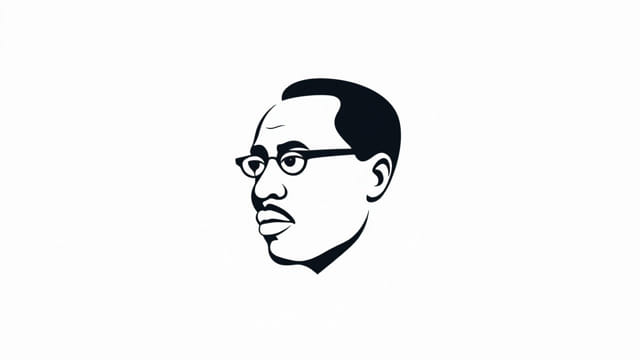
When Zaire was officially established in 1971, following a name change from the Democratic Republic of the Congo, its first president was Mobutu Sese Seko. Mobutu was a central figure in Congolese politics for decades, and his rule over Zaire shaped the country’s political, economic, and social landscape. His leadership remains a defining chapter in African history, marked by authoritarianism, nationalism, and complex relationships with both domestic elites and international powers. Understanding the role of Mobutu as the first president of Zaire provides key insights into post-colonial governance, Cold War geopolitics, and the long-term effects of personalist regimes in Africa.
Background and Rise to Power
Colonial Congo and Independence
Before Zaire, the region was known as the Belgian Congo. After decades of colonial exploitation, the Congo gained independence from Belgium on June 30, 1960. However, independence was quickly followed by chaos, political fragmentation, and the assassination of the country’s first Prime Minister, Patrice Lumumba.
Mobutu’s Military Influence
Joseph-Désiré Mobutu, a former army sergeant and journalist, initially served as Chief of Staff of the army under Prime Minister Lumumba. In September 1960, he orchestrated a military coup that deposed Lumumba and placed the country under military control. Mobutu gradually consolidated power and, in 1965, launched another coup that made him the uncontested leader of the country. This was the beginning of his long and controversial presidency.
The Creation of Zaire
Name Change and Authenticité
In 1971, Mobutu renamed the country Zaire as part of a larger campaign called Authenticité, aimed at erasing colonial legacies and promoting African identity. He also changed his own name from Joseph-Désiré Mobutu to Mobutu Sese Seko Kuku Ngbendu wa Za Banga, which roughly translates to the all-powerful warrior who goes from conquest to conquest leaving fire in his wake.
One-Party Rule
Mobutu established the Popular Movement of the Revolution (MPR) as the sole legal political party. All citizens were automatically considered members. The regime became increasingly autocratic, with tight control over political life, the press, and the military. Elections were held, but they lacked transparency and meaningful competition.
Domestic Policies and Governance
Economic Nationalism
Mobutu attempted to nationalize the economy by introducing the Zairianization policy in 1973. Foreign-owned businesses were seized and transferred to Zairians, many of whom lacked experience in managing them. While intended to create an indigenous business class, the policy led to widespread corruption, mismanagement, and economic decline.
Centralized Power
Mobutu centralized all power in the presidency. Parliament, the judiciary, and local government bodies held little real authority. Decision-making was concentrated within Mobutu’s inner circle, and loyalty to the president was rewarded with lucrative positions and privileges.
Corruption and Personal Wealth
During his presidency, Mobutu amassed immense personal wealth. Zaire’s natural resources, particularly copper, cobalt, and diamonds, generated substantial revenue, much of which was diverted for personal use. The term kleptocracy is often used to describe Mobutu’s regime, which became notorious for corruption and economic exploitation.
Foreign Relations and the Cold War
Strategic Importance
Mobutu’s Zaire held strategic importance during the Cold War. Positioned in central Africa, the country became a crucial ally for Western powers, particularly the United States and France, in countering Soviet influence on the continent. Mobutu presented himself as an anti-communist strongman, which earned him military and financial support from Western nations.
Support for Other Regimes
Mobutu often involved Zaire in the affairs of neighboring countries. He supported various anti-communist movements and was seen as a stabilizing force in Central Africa though critics argued his interference often worsened regional conflicts. His international relations allowed him to remain in power longer than many African leaders of the era.
Decline and Fall of the Regime
Economic Collapse
By the 1980s, Zaire’s economy had entered a deep crisis. Infrastructure decayed, public services crumbled, and inflation soared. The International Monetary Fund (IMF) and World Bank imposed structural adjustment programs, which led to austerity measures and widespread dissatisfaction among the population.
Internal Opposition and Civil Unrest
Opposition to Mobutu grew as economic hardship increased and political repression continued. In the early 1990s, under mounting pressure, Mobutu promised reforms, including a transition to multiparty democracy. However, these reforms were largely superficial, and his grip on power remained strong until external circumstances changed the equation.
Collapse in the 1990s
The Rwandan Genocide in 1994 and the resulting refugee crisis destabilized eastern Zaire. Rebel movements, supported by neighboring countries, began gaining strength. In 1997, Laurent-Désiré Kabila, leading a rebel coalition, launched a military campaign that eventually forced Mobutu into exile. Mobutu fled to Morocco, where he died later that year.
Legacy of Mobutu Sese Seko
Mixed Historical Views
Mobutu remains a polarizing figure in African history. Supporters credit him with maintaining national unity in a vast and diverse country, while critics focus on his authoritarianism, human rights abuses, and catastrophic economic management. His rule is often cited as an example of how absolute power can corrupt, especially in post-colonial contexts.
Impact on Modern Congo
After Mobutu’s fall, Zaire reverted to its previous name, the Democratic Republic of the Congo (DRC). The country has continued to struggle with political instability, civil war, and economic challenges many of which are rooted in the institutions and practices established during Mobutu’s presidency.
Lessons from Zaire’s Experience
The story of Mobutu and Zaire offers valuable lessons on governance, international politics, and economic management. It highlights the dangers of unchecked power, the pitfalls of resource dependency, and the complex interplay between domestic politics and global geopolitics.
Mobutu Sese Seko, as the first president of Zaire, left a deep and lasting mark on the nation and the African continent. His rise from army officer to authoritarian ruler reflects the turbulent history of post-independence Africa. Though his era is remembered for its excesses and failures, it also underscores the challenges of building a nation after colonial rule. As Zaire’s first president, Mobutu’s legacy continues to shape the narrative of leadership, corruption, and resilience in the heart of Africa.