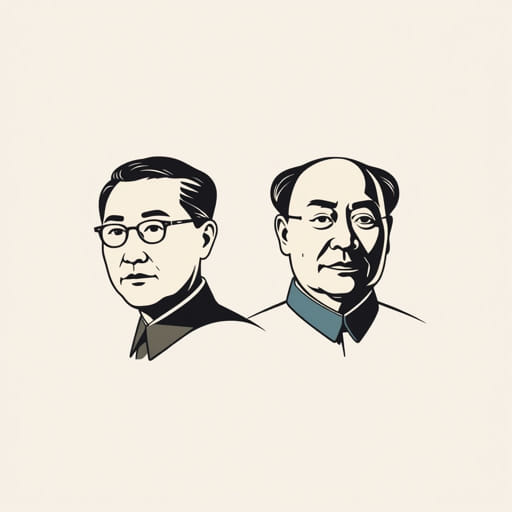
Ezra Vogel and Deng Xiaoping are two names closely associated with the transformation of modern China. While one was a prominent American scholar and the other a revolutionary leader turned reformer, their connection offers deep insights into China’s rapid rise in the late 20th century. Vogel, a Harvard professor and China expert, dedicated years of research to understanding the leadership of Deng Xiaoping, who guided China through a period of major economic reform and global integration after the death of Mao Zedong. Through his in-depth biography of Deng, Vogel helped the world comprehend how one man’s vision could reshape an entire nation’s future.
Ezra Vogel: The Scholar of East Asia
Ezra F. Vogel (19302020) was an American social scientist who specialized in East Asian studies. With a background in sociology and a deep interest in Asian societies, Vogel studied Japan, Korea, and China extensively. He served as the director of Harvard’s Fairbank Center for Chinese Studies and was one of the most respected scholars in the field.
His works include the best-selling bookJapan as Number Oneand his comprehensive biographyDeng Xiaoping and the Transformation of China. Vogel’s ability to combine scholarly rigor with engaging narrative allowed his research to reach beyond academia, influencing policymakers and the general public alike.
Understanding China through Vogel’s Perspective
Vogel’s approach to China was grounded in empathy, curiosity, and factual analysis. Rather than adopting a purely critical or ideological stance, he sought to understand the internal logic of Chinese political and social change. His balanced and detailed portrayals helped Western readers move beyond Cold War stereotypes and recognize the complexity of China’s modernization.
Deng Xiaoping: The Architect of Modern China
Deng Xiaoping (19041997) was a veteran of the Chinese Communist Party, a survivor of internal purges, and the de facto leader of China after Mao Zedong’s death. Though he never held the top titles of the state like president or party chairman his influence was unmatched. Deng led China from the late 1970s through the 1990s, initiating reforms that opened the country to foreign investment, restructured the economy, and improved living standards for millions.
His famous phrase, It doesn’t matter whether a cat is black or white, as long as it catches mice, symbolized his pragmatic approach. Deng moved China away from rigid socialist planning and introduced elements of market economics, resulting in unprecedented economic growth and poverty reduction.
From Revolution to Reform
Deng’s early life was marked by commitment to revolutionary ideology. He studied in France, worked in the Soviet Union, and returned to China as a dedicated Communist. During the Cultural Revolution, Deng was purged and exiled, but he was later rehabilitated. Once Mao died in 1976, Deng gradually consolidated power, positioning himself as the key driver of reform.
His policies included:
- Introducing the household responsibility system in agriculture
- Establishing Special Economic Zones (SEZs) to attract foreign investment
- Reforming state-owned enterprises to improve efficiency
- Encouraging private entrepreneurship and international trade
These initiatives marked a fundamental shift in China’s economic structure and set the stage for its emergence as a global power.
The Intersection: Vogel’s Biography of Deng
In 2011, Ezra Vogel published his landmark book,Deng Xiaoping and the Transformation of China. The biography is widely considered the most authoritative and comprehensive study of Deng’s life and impact. Vogel’s work is based on years of research, including interviews with Deng’s associates, Chinese officials, and analysis of primary sources.
The book traces Deng’s journey from a loyal party member to a bold reformer. It explores his complex personality, political maneuvering, and key decisions that changed China’s course. Vogel avoids both hagiography and vilification, portraying Deng as a leader who was both visionary and pragmatic but also willing to use force to maintain order, as seen during the Tiananmen Square protests in 1989.
Key Themes in Vogel’s Book
- Pragmatism Over Ideology Deng’s reforms were based on results, not dogma.
- Continuity and Change While keeping Communist Party rule, Deng shifted policies dramatically.
- Strategic Patience Deng emphasized gradual reform and crossing the river by feeling the stones.
- Balancing Act Vogel highlights Deng’s skill in maintaining unity while introducing change.
The biography serves not only as a historical account but also as a guide to understanding how leadership, policy, and context interact to shape national destiny.
Deng Xiaoping’s Global Legacy
Deng Xiaoping’s influence extends far beyond China’s borders. His reforms inspired other developing nations to pursue mixed economic models, blending state guidance with market mechanisms. In the global context, China’s rise under Deng reshaped economic supply chains, trade relations, and diplomatic alignments.
While critics point to Deng’s authoritarian tendencies and the suppression of political dissent, many credit him with lifting hundreds of millions out of poverty and avoiding the economic stagnation that plagued other socialist states.
His strategy of opening up led to China’s entry into the World Trade Organization and turned the nation into the world’s second-largest economy. The legacy of Deng is visible in every Chinese megacity, technological innovation, and infrastructure project across the country today.
Vogel’s Lasting Contribution
Ezra Vogel’s scholarly work, especially his biography of Deng Xiaoping, has had a lasting impact on how China is viewed in the West. The book is not just a portrait of a leader it is a window into a transformative period in world history. Vogel helped humanize a figure often misunderstood or oversimplified and provided a framework for analyzing China’s rise without ideological bias.
His writings continue to be used in academic institutions, policy think tanks, and diplomatic circles. Vogel believed in building bridges between East and West and promoting dialogue based on mutual understanding and respect.
Other Works by Vogel
Besides his work on Deng, Vogel authored:
- Japan as Number One: Lessons for America A study of Japan’s post-war success
- The Four Little Dragons An analysis of East Asian economic development
- China and Japan: Facing History A look at historical tensions and modern relations
These works further showcase Vogel’s dedication to understanding East Asia’s development and promoting thoughtful engagement.
The relationship between Ezra Vogel and Deng Xiaoping is one of chronicler and subject, but also of two minds trying to interpret and shape the modern world. Through Deng’s leadership, China launched a new era of growth and reform. Through Vogel’s scholarship, the world gained a deeper understanding of that transformation. Their legacies are intertwined in the story of a nation that moved from isolation to influence, and in the study of how leadership, vision, and pragmatism can alter the course of history.