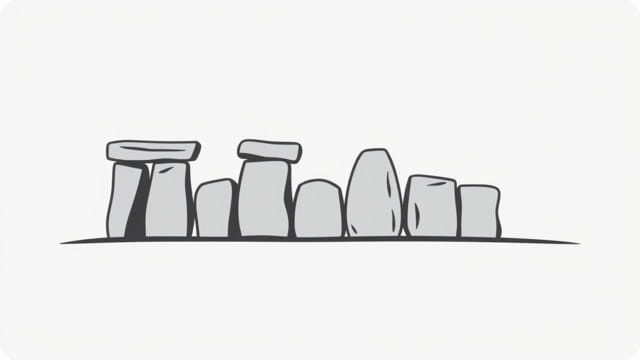
Megaliths are large stones that were used by ancient people to build structures or monuments. These structures were often used for special purposes such as burial, worship, or community gatherings. The word megalith comes from two Greek words: mega meaning large and lithos meaning stone. In Class 6 history, students learn about megaliths as an important part of early human civilization. These stone structures tell us about the lifestyle, beliefs, and practices of early societies, especially during the Iron Age and later prehistoric periods.
Definition of Megaliths
Megaliths are stone monuments created by arranging or stacking large stones. They were built without the use of mortar or cement and are often found in the form of tombs, circles, or upright stones. These monuments were usually created to mark burial sites or to perform rituals.
Class 6 Explanation of Megaliths
In the Class 6 syllabus, megaliths are introduced as one of the earliest forms of human construction. These structures help archaeologists and historians understand how ancient people lived, what tools they used, and how they honored their dead. Megaliths are not just piles of rocks they are carefully placed and carry meaning that still speaks to us thousands of years later.
Types of Megalithic Structures
There are different types of megalithic structures found across the world, including in India. Each type has its own purpose and design. Below are some common types:
- Dolmen A table-like structure made with two or more upright stones supporting a large flat stone on top. Used as a tomb.
- Menhir A single large upright stone, often placed to mark a location or for ceremonial purposes.
- Cairn A mound of stones built over a burial site.
- Stone Circles Circular arrangements of standing stones used for gatherings or religious functions.
- Rock-cut chambers Sometimes, large stones were hollowed out to create burial chambers.
Megalithic Sites in India
India has several important megalithic sites where archaeologists have found remains of ancient human settlements and burials. These sites provide evidence of how people in ancient times buried their dead and what objects they used in daily life.
Notable Megalithic Sites
- Brahmagiriin Karnataka One of the earliest discovered megalithic sites in South India.
- Adichanallurin Tamil Nadu Known for burial urns and iron tools found near megalithic structures.
- Junapaniin Maharashtra Famous for stone circles and iron-age artifacts.
- Hire Benakalin Karnataka A site with hundreds of dolmens and megalithic tombs.
These sites show us that people used different methods to bury their dead and often placed tools, weapons, and pots along with the bodies, showing belief in life after death.
How Megaliths Were Built
Building megaliths required planning and cooperation among members of the community. Since these stones were very large and heavy, people used simple tools, levers, and wooden rollers to move them. Teams of people would dig pits to place the stones and align them carefully. The construction of a megalith was often a community event and might involve rituals or celebrations.
Techniques and Tools
- Wooden rollers or sledges to transport stones.
- Levers made of wood to lift or tilt stones.
- Ropes made from plants or animal hides for pulling.
- Basic digging tools to prepare the ground.
Even though early people did not have advanced machinery, they used intelligence and teamwork to build these impressive monuments.
Purpose of Megaliths
While many megaliths served as burial places, they had other uses too. The purpose of megaliths can vary based on location and time period, but some general functions are recognized by historians and archaeologists.
Main Functions of Megaliths
- Burial Monuments Most commonly, megaliths were used to bury the dead. The remains were placed under or near the stones along with items such as weapons, pottery, and ornaments.
- Religious or Ritual Sites Some megaliths were likely used for worship, prayer, or seasonal celebrations.
- Community Markers Standing stones might have served as markers for tribal lands or meeting places.
- Memory and Honor Erecting stones to remember a great leader or event was also common.
These functions show how megaliths were central to the lives and beliefs of ancient communities.
What Megaliths Tell Us About Early People
Studying megaliths gives us a window into the past. These structures reveal not just how people built things, but how they thought about life, death, nature, and their place in the world. They also show that people lived in organized groups and had spiritual beliefs.
Key Insights from Megaliths
- People believed in life after death and prepared graves with items for the afterlife.
- They had knowledge of astronomy, geometry, and earthworks.
- Communities were cooperative and capable of large projects.
- Tools, weapons, pottery, and jewelry found at megalithic sites show technological development.
Such insights make megaliths an important part of our understanding of early history.
Megaliths are one of the most fascinating remains from ancient times. For students in Class 6, learning about megaliths introduces them to the creativity, beliefs, and skills of early human societies. These large stone structures tell a silent but powerful story of the people who came before us how they lived, what they valued, and how they remembered their dead. By studying megaliths, we not only learn about the past, but we also discover how history is preserved through stone, soil, and human curiosity. These monuments may be ancient, but their meaning and significance still echo through time.