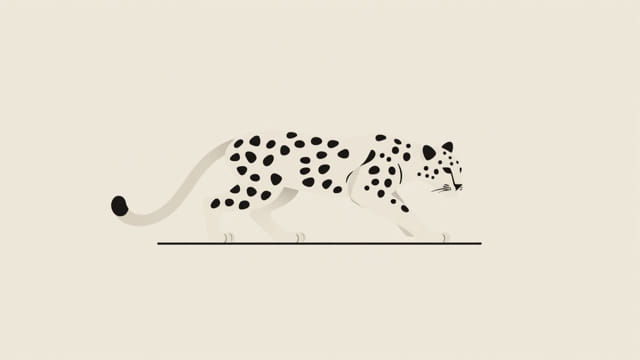
The Amur leopard is one of the most elusive and endangered big cats on the planet. Known for its thick spotted fur and ability to survive in extreme cold, this majestic creature is native to the Russian Far East and parts of northeastern China. While much attention is given to its declining population, understanding the behavior of the Amur leopard is equally important. From hunting and territorial instincts to breeding and solitary habits, the Amur leopard’s behavior offers critical insights into its survival and conservation. Knowing how this big cat lives, moves, and interacts with its environment can guide efforts to protect it more effectively.
Solitary Nature
One of the most defining traits of the Amur leopard is its solitary lifestyle. Unlike lions or cheetahs, which may live in groups or coalitions, Amur leopards are independent by nature. Each adult maintains a clearly defined territory and interacts with others only during mating season or when raising young.
Territorial Behavior
- Adult males maintain larger territories that may overlap with several female ranges.
- Territories are marked using scent (urine, claw marks) and vocalizations.
- Encounters between adults are rare and often avoided.
The solitary behavior of the Amur leopard reduces competition for food and mating opportunities. It also means that these leopards require vast tracts of undisturbed habitat to thrive.
Hunting and Feeding Behavior
Amur leopards are carnivorous predators with a diet that primarily includes ungulates such as deer and wild boar. They rely on stealth and strength rather than speed to catch their prey, and they often hunt during low-light hours to take advantage of their superior night vision.
Hunting Techniques
- Stalk and ambush strategy leopards get close before launching a surprise attack.
- Strong jaws and sharp claws used to deliver a fatal bite to the neck.
- Often drag prey to a secluded spot to eat, sometimes hoisting it into a tree to avoid scavengers.
Amur leopards are known to cover their kills with leaves or snow, returning to feed later. This behavior is crucial for conserving energy in harsh winter conditions where hunting can be more difficult.
Activity Patterns
The Amur leopard is generally nocturnal and crepuscular, meaning it is most active during the night and twilight hours. This helps it avoid both human interaction and competition with other predators such as tigers.
Movement and Range
- Can travel up to 1020 kilometers per night in search of food or mates.
- Highly agile capable of leaping over 10 feet horizontally and climbing trees.
- Territorial ranges vary from 50 to over 400 square kilometers depending on sex and prey availability.
Their ability to move silently and swiftly through rugged terrain makes them excellent hunters and elusive to humans and researchers alike.
Communication and Scent Marking
Although solitary, Amur leopards use various methods to communicate indirectly with others of their species. These methods are especially important for marking territory and attracting mates.
Forms of Communication
- Scent marking: Spraying urine or rubbing scent glands on trees and rocks.
- Vocalizations: Growls, hisses, and a sound known as sawing used during mating season.
- Claw marks: Scraping trees to signal presence and health.
These signs help prevent physical confrontations, which can be risky and energy-draining in the wild.
Breeding and Maternal Behavior
Amur leopards breed once every two to three years. The mating season typically occurs between late winter and early spring. After a gestation period of around 90105 days, females give birth to a litter of one to four cubs in a secluded den.
Maternal Instincts
- The mother raises the cubs alone; males do not participate in rearing.
- Cubs are born blind and helpless, requiring constant care and warmth.
- Weaning occurs at 23 months, with hunting skills taught through play and observation.
- Cubs stay with their mother for up to two years before becoming fully independent.
Maternal care is critical for cub survival, especially given the harsh climates and threats in their natural habitat. The cubs rely on their mother’s experience and protection during their most vulnerable stage of life.
Defensive Behavior and Adaptability
Amur leopards have developed several behavioral adaptations that help them survive in one of the coldest environments inhabited by big cats. Their cautious nature and physical prowess make them resilient hunters and elusive prey.
Survival Strategies
- Camouflage: Their pale, spotted coats blend well with snowy terrain.
- Seclusion: They avoid open spaces and human-populated areas.
- Conservation of energy: Slow, deliberate movements when not hunting help conserve energy during winter months.
These survival traits have allowed the Amur leopard to persist in isolated pockets of forest, even as its numbers have dwindled to critically low levels.
Threats to Natural Behavior
The natural behavior of Amur leopards is increasingly disrupted by human activities. Habitat fragmentation, poaching, and climate change all pose serious threats to their traditional patterns of life.
Impact of Human Encroachment
- Deforestation reduces the availability of safe territories and prey animals.
- Roads and infrastructure developments cut through core leopard habitats, causing avoidance behavior.
- Poaching of prey species forces leopards to hunt livestock, increasing human-wildlife conflict.
In many areas, the presence of humans has forced Amur leopards to become even more secretive, shifting their activity patterns and territories to avoid confrontation.
Conservation and Behavior Research
Understanding the behavior of Amur leopards is central to developing effective conservation strategies. Camera traps, GPS collars, and field observation have helped scientists learn more about how these animals interact with their environment.
Key Behavioral Insights for Conservation
- Establishing protected corridors for movement between territories
- Preserving core areas for breeding and raising young
- Minimizing human disturbances in high-use leopard zones
Conservation programs also focus on educating local communities about leopard behavior to reduce conflict and encourage coexistence.
The behavior of the Amur leopard is a blend of solitary instinct, stealthy hunting, and maternal devotion. These elusive big cats rely on a delicate balance with their environment, and their survival depends on the preservation of their behavioral freedom. As human impact continues to shape the landscape, understanding and respecting the natural behavior of the Amur leopard is more important than ever. By protecting their way of life, we protect not just a species, but an entire ecosystem enriched by their presence.