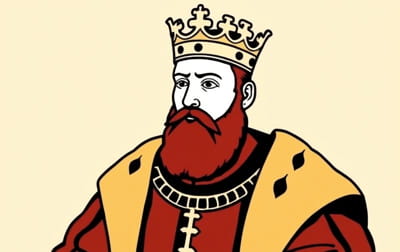
King Henry VIII by Hans Holbein the Younger A Masterpiece of Royal PortraitureFew royal portraits in history have had as lasting an impact as King Henry VIII by Hans Holbein the Younger. This image of the infamous Tudor monarch is one of the most iconic depictions of power, masculinity, and authority in Western art. Painted in the 16th century, it has come to symbolize not just Henry VIII himself, but the grandeur and intensity of the English Renaissance.
The portrait has been reproduced countless times and remains a key reference point for discussions of royal imagery, Renaissance portraiture, and political propaganda through art. Holbein’s detailed and commanding style captures more than just a likeness it portrays a ruler who wanted to be seen as larger than life.
Who Was Hans Holbein the Younger?
Hans Holbein the Younger was a German-Swiss artist born in 1497. He gained fame as one of the greatest portraitists of the Northern Renaissance. Holbein became court painter to Henry VIII, where he produced portraits of the king, his queens, and notable figures of the English court.
Holbein was known for his meticulous attention to detail, lifelike depictions, and the ability to capture both physical appearance and personality. His work played a crucial role in shaping the public image of England’s most famous king.
The Portrait of King Henry VIII A New Kind of Royal Image
Holbein’s most famous painting of Henry VIII was created around 1536-1537. Although the original full-length panel has been lost, it is known through copies and preparatory sketches. In this portrait, Henry stands facing forward, his legs apart, arms confidently akimbo, dressed in rich fabrics and adorned with jewels.
This stance was highly unusual for the time. Most royal portraits before Holbein showed the king in profile or engaged in symbolic acts of governance. Holbein broke with tradition and presented Henry not as a passive ruler but as a powerful, almost intimidating figure. This portrait set a new standard for monarchical imagery.
Key Features of the Portrait
1. Full-Frontal Pose Henry’s posture is direct and confrontational. He faces the viewer head-on, with no signs of weakness or doubt. This positioning sends a message of control and strength.
2. Rich Clothing and Detail Holbein’s attention to texture and fabric is exceptional. The king wears a doublet embroidered with gold thread, a fur-lined robe, and a wide codpiece a detail often noted for its exaggeration, emphasizing virility and dominance.
3. Expression of Power Henry’s facial expression is composed and confident. His slightly narrowed eyes and pursed lips convey determination. Holbein carefully shaped this image to reflect the king’s desired persona authoritative, majestic, and unchallenged.
The Political Power of Portraiture
At the time of this painting, Henry VIII was at the height of his power. He had broken with the Catholic Church, declared himself the Supreme Head of the Church of England, and dissolved monasteries. He needed a new image that supported his political and religious authority.
Holbein’s portrait was not just a piece of art it was propaganda. It was designed to reinforce Henry’s image as a powerful, almost divine monarch. The portrait was replicated and sent across England and beyond, reminding all who saw it of the king’s presence and supremacy.
Holbein’s Role at the Tudor Court
As court painter, Holbein had to balance artistic expression with royal expectations. His survival depended on pleasing the king, yet his genius lay in doing so while maintaining incredible artistry. He was trusted not only with images of the monarch but also with creating portraits of potential queens, such as Anne of Cleves.
Holbein’s role went beyond painting; he shaped how the world viewed Henry VIII. Even centuries later, his depiction continues to influence film, literature, and education.
Legacy of the Painting
Though the original painting was destroyed in a fire at Whitehall Palace in 1698, copies survive, including a well-known version at the Walker Art Gallery in Liverpool. The preparatory cartoon is also held at the National Portrait Gallery in London.
The image has been reprinted in history books, recreated in movies and television series, and parodied in modern culture. It remains the definitive visual of Henry VIII despite the fact that the real man may have looked quite different, especially in his later years when he was overweight and suffered from health issues.
Holbein’s work effectively immortalized an idealized version of the king strong, commanding, and untouched by age or weakness.
Artistic Techniques Used by Holbein
1. Precision and Realism Holbein used fine brushes and layered glazes to achieve remarkable precision in skin texture, jewelry, and textiles. This level of detail gave his work a lifelike quality rarely seen before.
2. Symbolic Elements Every element in the portrait serves a purpose. The sword, gloves, and rings are not just accessories they signify status, masculinity, and rule. Even the posture itself is a symbol of dominance.
3. Minimal Background Distraction Holbein often used dark or neutral backgrounds to bring full attention to the subject. This technique made the king’s presence even more striking and undivided.
Cultural Impact and Modern References
The Holbein portrait of Henry VIII has influenced countless representations of monarchs. It defined how we imagine royalty richly dressed, bold in posture, and standing as the embodiment of the state.
Artists, historians, and filmmakers have drawn upon Holbein’s style to create modern versions of regal authority. It has appeared in pop culture, from comic illustrations to historical dramas like The Tudors and Wolf Hall. The painting’s legacy endures because it captures something timeless about power and presentation.
Conclusion A Lasting Symbol of Royal Authority
Hans Holbein the Younger’s portrait of King Henry VIII remains one of the most powerful and enduring images in the history of art. It was more than a likeness it was a statement of authority, crafted at a time when monarchy was being redefined.
Through exceptional technique and sharp political awareness, Holbein gave us a portrait that still shapes how we view not only Henry VIII but the very nature of leadership. In this image, art and history are forever intertwined, offering a visual narrative of ambition, control, and the legacy of power.