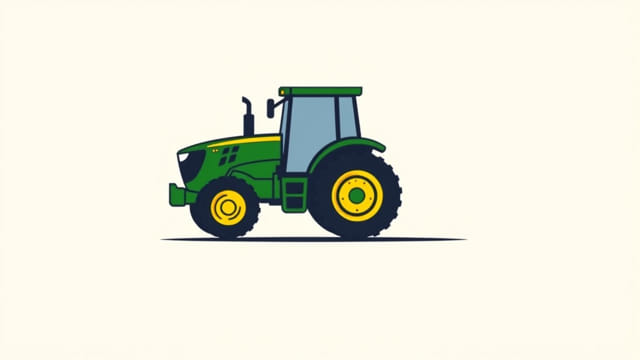
The history of agricultural machinery changed forever with the introduction of the first John Deere tractor. Before tractors became widespread, farmers relied heavily on animal labor and manual tools to manage their fields, which was physically demanding and time-consuming. When John Deere entered the tractor industry, the company brought with it a commitment to quality and innovation that reshaped farming practices. This topic explores how the first John Deere tractor came into existence, its impact on agriculture, and why it remains a significant milestone in the world of farm equipment.
The Beginning of John Deere’s Tractor Journey
From Plows to Power
John Deere, originally known for its self-scouring steel plow introduced in 1837, did not immediately manufacture tractors. For decades, the company focused on making plows, cultivators, and other agricultural implements. However, as steam and gasoline-powered tractors began transforming farms in the early 20th century, John Deere realized the need to adapt to remain competitive in the evolving industry.
Acquisition of Waterloo Gasoline Engine Company
The turning point came in 1918 when John Deere acquired the Waterloo Gasoline Engine Company, located in Iowa. Waterloo had developed a successful tractor model known as the Waterloo Boy. This acquisition marked John Deere’s official entry into the tractor market and laid the foundation for what would become a global leader in agricultural machinery.
The First John Deere Tractor: The Waterloo Boy
Specifications and Design
The Waterloo Boy was the first tractor sold by John Deere, even though it was originally created before the company acquired Waterloo. After the acquisition, John Deere began branding the tractor under its name. The Waterloo Boy Model N was particularly notable for its simplicity and effectiveness. It featured a two-cylinder engine capable of running on kerosene, a more affordable fuel option for many farmers.
- Engine: 2-cylinder horizontal engine
- Horsepower: Approximately 12 HP on the drawbar and 25 HP on the belt
- Transmission: Two forward gears and one reverse
- Fuel: Primarily kerosene, with gasoline used for starting
- Cooling System: Water-cooled
Functionality in the Field
Despite its relatively simple design, the Waterloo Boy was an effective machine. It could pull heavy equipment, power threshers, and perform a variety of field tasks. Farmers appreciated its ruggedness and reliability, which were critical in an era when machine breakdowns could jeopardize an entire harvest.
Adoption and Market Response
Initial Reception
When John Deere first introduced the Waterloo Boy to its established customer base, there was some skepticism. Many farmers were still transitioning from horse-drawn equipment to motorized tractors and were cautious about investing in this new technology. However, as the benefits of mechanical power became evident greater efficiency, reduced labor, and increased productivity sales began to grow steadily.
Expansion and Production
Between 1918 and 1923, John Deere sold thousands of Waterloo Boy tractors. The success of the machine encouraged the company to invest further in tractor development. This period was crucial in establishing John Deere’s reputation as a reliable manufacturer of powerful and user-friendly agricultural machinery.
The Evolution After the Waterloo Boy
Introduction of the Model D
In 1923, John Deere released the Model D tractor, which was the first tractor fully designed and manufactured by John Deere after the Waterloo acquisition. This model replaced the Waterloo Boy and became a long-lasting favorite among farmers, remaining in production until 1953.
Legacy of the Waterloo Boy
Although the Model D took over in terms of sales and innovation, the Waterloo Boy remains a historic symbol. It represented not only the beginning of John Deere’s involvement in the tractor industry but also a broader shift in farming technology across America and the world.
Impact on Modern Agriculture
Setting the Standard
The introduction of the Waterloo Boy by John Deere helped set a new standard for tractors. The company’s emphasis on durability, performance, and ease of maintenance created a benchmark that other manufacturers sought to match. John Deere’s reputation for high-quality machinery can be traced back to this early product.
Encouraging Mechanized Farming
The success of the first John Deere tractor played a major role in the movement toward mechanized agriculture. By making tractors accessible and reliable, John Deere helped small and large farms alike to transition away from manual labor. This shift ultimately contributed to the rise in agricultural productivity during the 20th century.
Key Benefits of the First John Deere Tractor
- Increased Efficiency: Farmers could work larger fields in less time.
- Reduced Labor: Less need for animal power or large teams of workers.
- Affordability: Fueling with kerosene made operating costs lower.
- Reliability: Designed to handle tough farming conditions without frequent breakdowns.
Preservation and Collectibility
Restoration by Collectors
Today, restored Waterloo Boy tractors are prized by antique machinery collectors and agriculture enthusiasts. These tractors are often displayed at vintage farm shows, museums, and exhibitions. Many collectors see them as the roots of modern farming equipment, and they are maintained as living history pieces.
Company Heritage
John Deere continues to celebrate its tractor heritage through marketing, museum exhibits, and historical preservation. The John Deere Tractor & Engine Museum in Waterloo, Iowa, pays homage to the original Waterloo Boy and the company’s pioneering efforts in tractor development.
The first John Deere tractor the Waterloo Boy was more than just a piece of machinery. It was a symbol of agricultural progress, innovation, and the start of a legacy that still influences farming today. Through its acquisition of the Waterloo Gasoline Engine Company and the success of the Waterloo Boy, John Deere laid the groundwork for a future where machines would revolutionize food production around the world. For farmers of the past and present, this historic tractor remains a powerful reminder of how technology can transform lives and industries.